What’s New
Respiratory Reimagined
Learn about the options to optimize algorithms and enable diagnostic stewardship for better respiratory patient management.

Respiratory News
Stay up to date on the recent respiratory infection information!

Link to: A Flexible Model Is Necessary for Today’s Respiratory Testing
July 21, 2025
A Flexible Model Is Necessary for Today’s Respiratory Testing
Link to: Amid Growing Measles Outbreaks, Clinical Labs on Alert to Increase Testing Capacity
June 30, 2025
Amid Growing Measles Outbreaks, Clinical Labs on Alert to Increase Testing Capacity
Diagnostic Stewardship
Clinical Advantage Through Diagnostics Stewardship
Diasorin is supporting the evolution of respiratory algorithms and prioritizing respiratory Diagnostic Stewardship through our existing and growing portfolio of respiratory assay systems that enable labs to select the right test for the right patient at the right time.
Diagnostic Stewardship is a proactive approach that helps healthcare professionals choose the most appropriate diagnostic tests based on a patient’s clinical presentation and epidemiological context. This improves diagnostic accuracy, reduces unnecessary testing, and supports better patient outcomes while helping control healthcare costs.
Learn more about Diagnostic Stewardship in our eBook.

Critical Factors

The Patient
Diagnostic Stewardship aims to factor in the uniqueness of each patient in clinical diagnostic testing. Doctors often factor in the following variables:
- Age
- Immunocompetency
- Vaccination status
- Medication

The Test
Having the right options to meet the needs of the patient and your institution is critical for a clinical laboratory. As the diagnostic specialists, Diasorin offers a diverse menu of testing options that empowers your laboratory:
- Targeted testing
- Flexible syndromic
- Testing algorithm solutions

The Time
The timing of events and patient status (hospitalized or outpatient needs) can be critical for specific test utilization:
- Seasonality
- Outbreaks or out of season testing
- Inpatient vs. outpatient
Patient Needs
The Patient
The testing needs and requirements are not uniform across all patient demographics and a number of factors should be considered. These factors can change the need for targeted testing or syndromic multiplex approaches.
Age is a critical factor to consider when choosing a test, as certain respiratory conditions are more prevalent in specific age groups. Below are some of the more common targets to consider for each age group.

Pediatric – This patient demographic is highly susceptible to specific pathogens that are less prevalent in other age groups. Selective testing is often required for this demographic and often include the following targets:
- RSV
- Bordetella
- hMPV
Adult – Healthy adults are generally less prone to specific infections and are typically tested based on respiratory seasonal and epidemiological diseases such as:
- Influenza
- SARS-CoV-2
Senior – Patients of advanced age are at increased risk for severe clinical outcomes and are more likely to contract a variety of pathogens such as:
- Influenza
- SARS-CoV-2
- RSV
Immunocompromised — These patients are among the highest-risk populations. Their immunocompromised status may result from various factors, such as medication or to cancer and they are more likely to benefit from a panel-based approach to support their diagnostic needs.
Symptoms & clinical background — In some cases, patients may present with specific clinical symptoms or may have been exposed to a particular pathogen. This background information can often help narrow the focus of your diagnostic search.
Access to flexible testing options allows the healthcare system to test appropriately without increasing medical cost.
Testing Options
Choosing a Test
Choosing the appropriate respiratory molecular test is important to ensure accurate, timely diagnosis while avoiding unnecessary testing and costs. This decision can potentially optimize care for a patient based on their symptoms and the season.

“It’s not often that we get to yield positive clinical impact while decreasing costs at the same time, and that remains something we’re very excited about.”
Nick Decker, Holland Hospital*
What is targeted testing and when do you use it?
- Targeted testing is defined as an assay which detects and/or differentiates a focused group of pathogens.
- This kind of assay can be specifically chosen based in clinical presentation and disease prevalence to reduce unnecessary cost and testing.

What is flexible syndromic and when to use it?
- Syndromic testing refers to large multiplex panels that target multiple pathogens for a specific disease state, such as respiratory infection. The goal of syndromic testing is to rapidly identify the causative agent when the differential diagnosis is broad.
- This approach might be appropriate when the patient needs fast treatment to prevent further decline, such as elderly or immunocompromised patients. In these cases, the LIAISON PLEX® Respiratory Flex assay offers a flexible, targeted approach to syndromic testing which makes it a preferred option for many.

What’s right for your lab/patients?
- Some factors to consider when choosing the right test for your lab are throughput needs, experience level of lab personnel, and patient population.
- Many sites have a diagnostic stewardship review board compromised of representatives from the clinical laboratory, doctors, and finance to help determine the appropriate testing algorithms and selecting the tests that most benefit the patients and the lab.

Should I implement both approaches
- The patients within the population of a healthcare system can be diverse with unique needs, causing many labs to adopt both targeted and syndromic tests. These tests, whether used independently or in an algorithmic approach, help maximize the flexibility.
- For example, a site might find it more cost effective to first screen unvaccinated seniors for RSV using the Simplexa® Flu A/B & RSV Direct assay. If that returns negative results, they may pivot to a broader search using a flexible syndromic assay, such as the LIAISON PLEX® Respiratory Flex Assay to further test for other targets based on clinical presentation or need.

Clinical Timing
The Timing Factor
Seasonality – Seasonality has become an important factor with the growing emphasis on Diagnostic Stewardship. During the height of flu season, the ability to differentiate COVID-19 from influenza and RSV is critical for guiding the course of treatment.
Other pathogens, such as parainfluenza, tend to be more prevalent from summer to early fall, while influenza and RSV are more likely to be relegated to the standard winter season.
Some respiratory viruses like SARS-CoV-2 have established patterns of multiple spikes throughout the year and there are times when it may only be necessary to test for this specific target.
Many labs have developed different testing algorithms to manage patient testing based on seasonal trends. Explore examples of algorithms designed to address seasonal needs for different patient profiles.

Typical distribution of common respiratory viruses
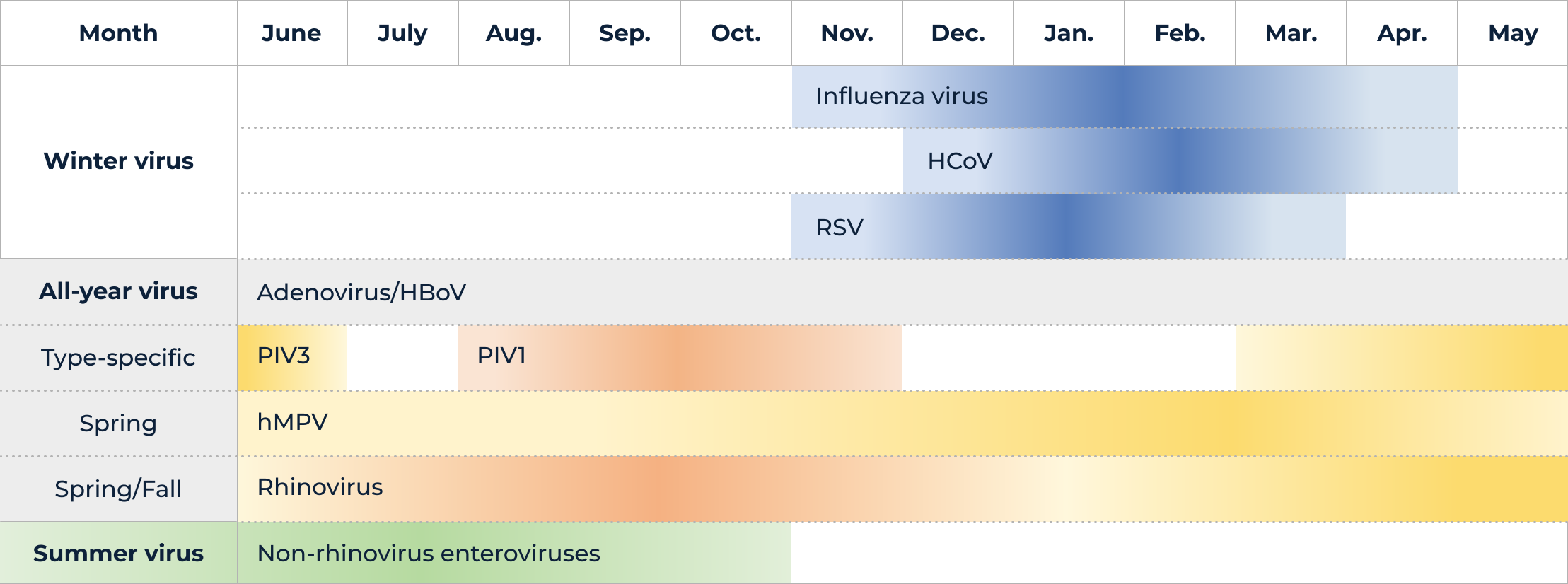
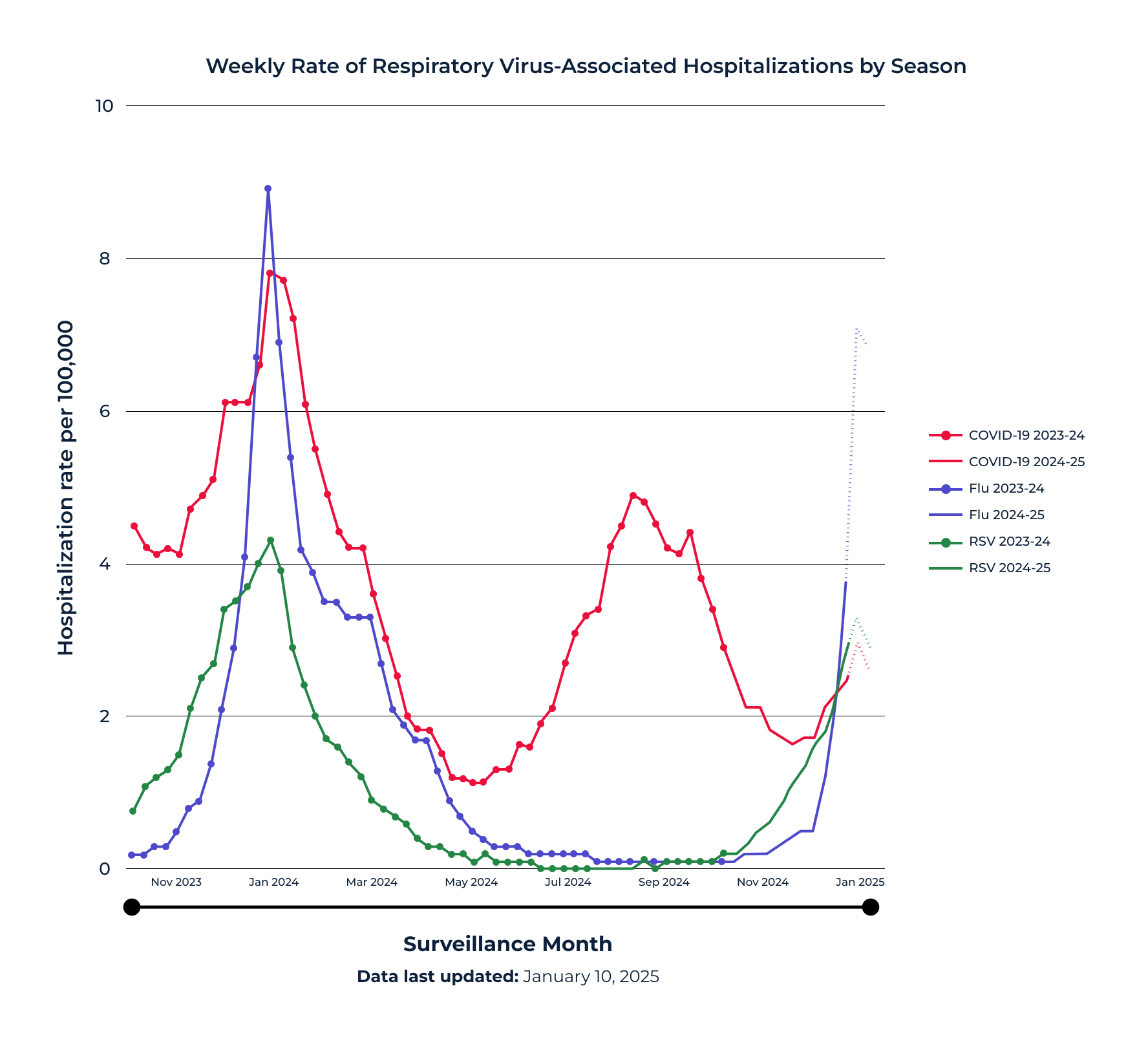
Outbreaks – Outbreaks can often lead to a large number of similar cases, driving high testing volumes. They also create the need for targeted test selection, giving the physician the ability to identify the disease accurately, to support appropriate treatment, and help possibly curb the spread. Flexibility within a testing portfolio can be a strong benefit when managing these scenarios.
To see the latest information on US based outbreaks and respiratory trends (COVID-19 , flu, & RSV), use the link below or search for CDC updates.
Clinical Information
Pathogens
Adenovirus
Adenoviruses cause 1-7% of respiratory infections in adults and 7-8% in children under 5. Infections usually peak in early spring or winter but could occur year-round without distinct seasonality. Outbreaks are rare in the general population but can occur in crowded settings like military bases or long-term care facilities.
Human Coronavirus (HKU1, NL63, OC43 and 229E)
Non-novel coronaviruses are the second most common cold cause, after rhinoviruses. They account for 35% of respiratory infections in winter and spring, and 15% during the rest of the year. The four common types are HCoV-NL63, HCoV-229E, HCoV-HKU1, and HCoV-OC43, typically leading to mild upper respiratory illness, with serious cases rare in infants, young children, and the elderly. Coronaviruses are most common from November to March in the Northern Hemisphere and April to August in the Southern Hemisphere. Their symptoms often resemble those of rhinovirus and influenza A.
Human Enterovirus/Rhinovirus
Enteroviruses (EVs) are common, causing infections ranging from mild febrile illness to severe conditions like aseptic meningitis, paralysis, myocarditis, and neonatal enteroviral sepsis. EV circulation is year-round or linked to the rainy season. Rhinovirus (RVs) accounts for over half of respiratory infections, occurring year-round with major peaks in autumn and smaller peaks in spring.
Human Metapneumovirus
Human Metapneumovirus (hMPV) is a major cause of acute respiratory infections, primarily in children, with 90-100% infected by ages 5-10. It is seasonal, circulating from winter to spring, like RSV and influenza.
Influenza A & B
Influenza classically presents with a combination of upper and lower respiratory signs and symptoms, fever, headache, myalgia, and general malaise. Illness can take on a variety of appearances ranging from isolated respiratory findings that resemble the common cold, to severe pneumonia requiring hospitalization. The duration of illness is typically 2-5 days, but symptoms may last for a week or longer.
Parainfluenza 1, Parainfluenza 2, Parainfluenza 3, Parainfluenza 4
Human parainfluenza viruses (PIVs) are the second most common cause of respiratory infections in children under 5, accounting for up to 17% of hospitalizations. PIVs include four serotypes: 1, 2, 3, 4a, and 4b, with specific seasonal patterns. PIV-1 dramatically increases from September to December in odd years, while smaller outbreaks of PIV-2 occur in alternate years. PIV-3 outbreaks primarily happen from April to June, and PIV-4, rarely isolated, has a similar pattern to PIV-3, causing serious outbreaks in nursing homes and daycare facilities.
Respiratory Syncytial Virus (RSV)
RSV is most prevalent in infants and toddlers, though it can be found in adults as well. In children, It can present as a cold-like illness, bronchitis, and croup, or lower respiratory infections like bronchitis and pneumonia. In adults it usually presents as an upper respiratory tract illness with runny nose, sore throat, and cough, sometimes accompanied by headache, fatigue or fever.
SARS-CoV-2 (COVID-19)
SARS-CoV-2 is a novel severe acute respiratory syndrome (SARS), that causes COVID-19 disease. Patients with COVID-19 have had mild to severe respiratory illness with symptoms of fever, cough and shortness of breath. Many patients have had complications including pneumonia in both lungs increased risk of cardiovascular disease, and Long-COV other complications that lead to severe morbidity or mortality.
Bordetella holmesii
Bordetella holmesii can cause pertussis-like respiratory infections and is often misidentified as Bordetella pertussis by standard diagnostics. Unlike B. pertussis, it does not produce the pertussis toxin, but both share a genomic region with the IS481 insertion element used for diagnosis. Consequently, B. holmesii infections may be under-detected and under-reported, potentially accounting for 0% to 29% of those with pertussis-like symptoms. Reports of B. holmesii are more common from September to March, suggesting a seasonal pattern.
Bordetella pertussis / parapertussis
Pertussis, commonly called whooping cough, is a highly contagious respiratory disease cause by the bacteria; Bordetella pertussis and Bordetella parapertussis. Clinically, it presents with a prolonged cough and patients often have a violent cough that may be followed by an inspiratory whoop and vomiting.
Chlamydia pneumoniae
Chlamydia pneumoniae is an intracellular pathogen causing 10% of community-acquired pneumonia and 5% of bronchitis, pharyngitis, and sinusitis. Its incubation period is longer than most respiratory infections, about 3-4 weeks. Infected individuals may be asymptomatic or experience mild symptoms like fever, rhinitis, hoarseness, and a persistent dry cough. The infection can happen year-round but follows a 4-year cycle, peaking in winter from January to April. Outbreaks often occur in institutions like schools, long-term care homes, and military barracks.
Group A Strep
Streptococcus pyogenes, also known as Group A Streptococcus, is a beta-hemolytic bacterium that belongs to Lancefield serogroup A. It is the major cause of bacterial acute pharyngitis and if left undiagnosed and untreated, it can cause a number of severe complications including acute rheumatic fever, scarlet fever, glomerulonephritis, and streptococcus toxic shock syndrome.
Mycoplasma pneumoniae
Mycoplasma pneumoniae is a common bacterial cause of respiratory infections, primarily affecting individuals over 5 and under 40 years old. Symptoms are often mild and the incubation period lasts 2 to 3 weeks, making it a leading cause of community-acquired pneumonia (CAP), particularly in children. About 3-10% of infected children develop CAP, with up to 5% needing hospitalization. Among hospitalized children, up to 10% may require ICU care. While M. pneumoniae infections are usually self-limiting, they can lead to severe diseases across all ages. This bacterium is globally present year-round, with increased cases in the US during summer and early fall.
Respiratory Resources
Webinars
Diasorin is committed to leading the way in diagnostic medicine by developing innovative, clinically meaningful assays designed to enhance patient outcomes. Explore our collection of webinars featuring groundbreaking technologies and insights from esteemed key opinion Leaders across diverse medical specialties.


Resources
Looking for more in-depth respiratory content?
Find below a comprehensive library of blogs, white papers, videos, and eBooks designed to keep you informed on the latest respiratory trends.
- Empowering Diagnostic Stewardship in the Post Pandemic World: The Diasorin Respiratory eBook
- Diagnostic Stewardship – A path for better patient treatment and health economic
- The Post-Emergency Reimbursement Landscape for COVID-19 Testing
- Amid Pertussis Surge, Appropriate Bordetella Testing Options Are Essential For Better Outcomes
- What You Need to Know About Customizable Respiratory Testing
- The changing respiratory testing landscape: Why the value of flexibility is key
- Diagnostic Stewardship: A Primer
- Reduce hands-on time with LIAISON PLEX®’s simple workflow

 Dialog